Orionids after the peak: why moonlight still matters
The forecast maximum was October 21–22. The shower’s wider activity window continues, but darkness and local conditions matter more than a date on a calendar.
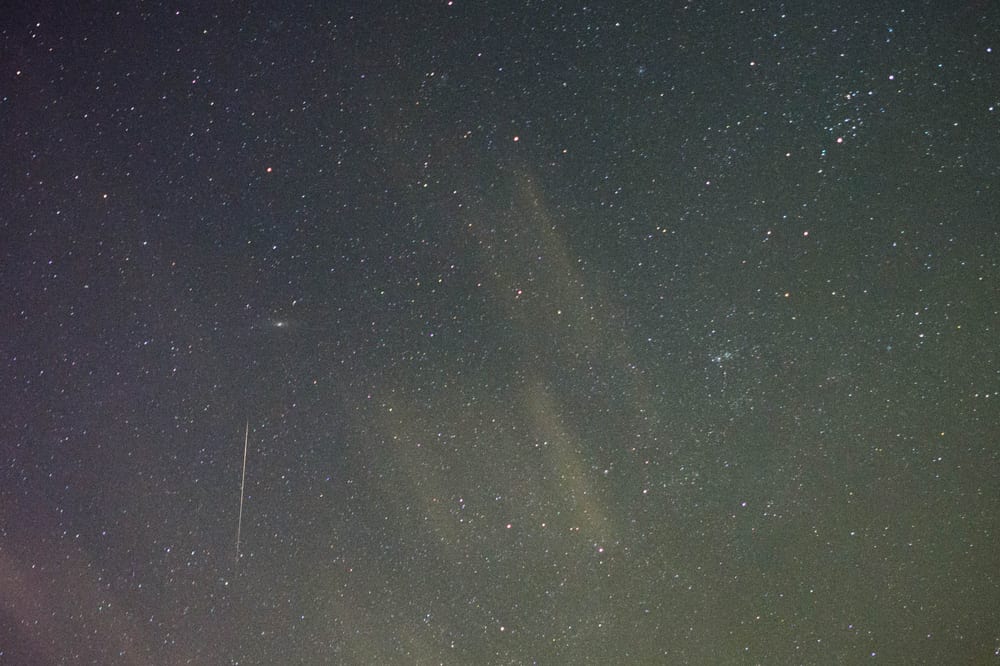
The Orionids’ forecast peak night of October 21–22 has passed, but the American Meteor Society’s calendar lists the shower as active through November 7. That longer window is a reason to keep expectations open, not a promise that any particular night will produce a good display. [1]
NASA’s October skywatching guide explains the connection to Halley’s Comet: Earth passes through debris the comet left behind, producing meteors in our atmosphere. Its guidance for the peak emphasized looking before dawn after moonset because bright moonlight could obscure fainter streaks. [2]
Independent observing commentary adds an important limit to the forecast. In Space.com, experienced skywatcher Jamie Carter distinguishes idealized meteor rates from what a person actually sees. His October 16 column argues for choosing a useful dark interval and checking the weather, rather than committing a whole night simply because a calendar labels it the maximum. [3]
Carter also notes that the shower can produce meteors on either side of its peak. That supports a more cautious approach after October 22: check the Moon’s setting time, morning twilight and weather for your own location. The time quoted for a previous night or another city is not a current local viewing forecast. [3]
EWN has not measured this year’s meteor rate or verified local sky conditions. NASA and AMS guidance is not two independent observations of the 2026 display, and Carter’s column was written before the peak. These sources support an explanation of what affects visibility; they do not establish what observers saw overnight. [2][1][3]
Sources & context · 3
- American Meteor Society
Publication date not established. Current activity window and lunar-interference guidance. Forecast calendar, not an observed count. Exact Moon illumination differs from Space.com; no percentage is used.
- NASA / JPL — October skywatching guide
Published 2026-10-01. Comet-debris explanation and peak-night viewing guidance. Creator transcript and text inspected; no new video playback, audio or frame inspection. Some NASA shower facts use AMS, so agreement is not independent measurement.
- Jamie Carter / Space.com
Published 2026-10-16. First-person observing analysis of idealized rates, moonlight, weather and activity around the peak. Independent commentary, not a 2026 observed-rate report; written before the peak. No photos or article text reused.